Let's Cook: A Playful Font for Food & Kitchen Projects
There’s something undeniably joyful about the kitchen—the sizzle of a pan, the aroma of spices, the vibrant colors of fresh ingredients. Capturing that energy in your design projects can be a challenge, especially when you’re trying to communicate warmth, approachability, and a dash of fun. That’s where a typeface like Let's Cook comes in, offering a visual shortcut to all things culinary without sacrificing professionalism or creativity.
A Typeface That Feels Like a Celebration
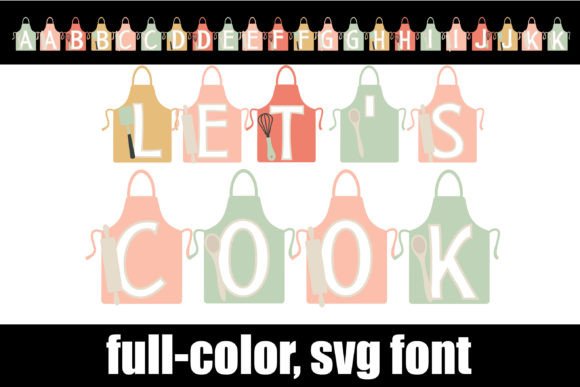
Let's Cook isn’t just another display font; it’s a full-color typeface that immediately grabs attention. Imagine bold, heavy sans-serif letterforms sitting proudly on colorful, illustrated aprons—that’s the core visual concept. Each character is rendered with a playful, textured quality, as if it’s been screen-printed onto fabric. This gives the font a tactile, handmade feel that’s perfect for projects aiming to evoke comfort, home cooking, or artisanal craftsmanship.
What makes this font stand out in a crowded market of culinary-themed typefaces is its integrated color and texture. Unlike standard fonts that rely on flat, single-color letters, Let's Cook uses OpenType-SVG technology to embed multi-colored, detailed graphics directly into the font file. This means you get intricate designs—like stitches, fabric folds, and patterned apron textures—right within the typeface. For designers, this eliminates the need for additional vector overlays or complex layering in Photoshop or Illustrator. You simply type, and the font does the heavy lifting.
Practical Applications for Real-World Projects
So, where does a font like this actually work? Its bold, graphic nature makes it ideal for applications where you need to make a quick, memorable impact. Think of it as a specialized tool in your design toolkit, not a workhorse for body copy.
Branding & Logo Design: If you’re creating an identity for a bakery, food truck, cooking class, or a recipe blog, Let's Cook can serve as the cornerstone of your visual language. It instantly communicates the brand’s niche without a single word of explanation. Use it for your primary logo lockup, or as a striking element in submarks and secondary graphics. The built-in color and texture add depth that a simple vector logo might lack.
Packaging & Labels: For food products, packaging is everything. Let's Cook can make your product jump off the shelf. Imagine it on a jam jar label, a spice packet, or a box of artisan pasta. The apron texture adds a layer of perceived quality and handcrafted appeal, suggesting care and authenticity. Just be sure to pair it with a clean, highly legible sans-serif or serif font for any necessary regulatory information or detailed descriptions.
Social Media & Digital Content: In the fast-scrolling world of Instagram, Pinterest, or TikTok, you have milliseconds to capture interest. The vibrant, textured look of this font is perfect for creating eye-catching graphics for recipe announcements, cooking tips, menu specials, or YouTube thumbnails. It adds personality and stops the scroll, making your content more shareable and engaging.
Print & Physical Materials: Don’t limit it to screens. This typeface shines on physical items like restaurant menus (especially for daily specials), event posters for cooking workshops, merchandise like aprons or tote bags, and festive invitations for dinner parties or culinary events. The tactile quality translates beautifully to print, especially on textured paper stocks.
Pairing and Professional Considerations
Using a highly stylized font like Let's Cook requires a thoughtful approach to maintain readability and professional balance. Its strength is in headlines, titles, and short bursts of text. Avoid setting paragraphs or long sentences with it, as the intricate details can become visually overwhelming and hinder legibility at smaller sizes.
The key to effective use is font pairing. Balance its bold personality with a simpler, complementary typeface. A clean, geometric sans-serif (like Montserrat, Poppins, or Avenir) can provide modern contrast and handle all supporting text—from body copy on a website to descriptions on packaging. For a more traditional or rustic feel, a classic serif font (like Lora or Merriweather) can create a pleasant hierarchy. The goal is to let Let's Cook be the star of the show while its partner font handles the supporting narrative clearly.
Before committing to a project, it’s crucial to test the font in context. Type out your actual headlines or words. How does the color palette within the font interact with your chosen brand colors? Does the texture read well at the intended size? Always view your mockups at 100% zoom and, if possible, print a test page to check for any unintended visual clashing.
Technical Notes and Creative Freedom
As a premium color font (Opentype-SVG), Let's Cook is compatible with modern design software that supports this technology, including Adobe Photoshop, Illustrator, Silhouette Studio, and Inkscape. This compatibility gives you full creative control over the font’s appearance within these applications.
It’s important to note that the standard OTF or TTF files included are not compatible with Cricut machines. This is a common limitation of color fonts, as the embedded SVG data that creates the color and texture isn’t recognized by all cutting machines. For crafters, this means it’s best suited for digital designs or print-then-cut projects rather than single-color vinyl cutting.
When you invest in a creative font like this, you’re also investing in a design asset that can save you time and inspire new creative directions. It’s a piece of your brand identity toolkit that can be used across multiple projects, from your web design hero sections to your marketing assets and editorial layouts. Just ensure you review the licensing included with your purchase to confirm it covers your intended use, whether for personal projects or commercial client work.
Ultimately, typography is about communication. A font like Let's Cook communicates a very specific, delightful message. It’s not trying to be everything to everyone, and that’s its greatest strength. For the right project, it can be the ingredient that ties your entire visual story together, making your designs feel cohesive, energetic, and unmistakably connected to the joy of cooking.